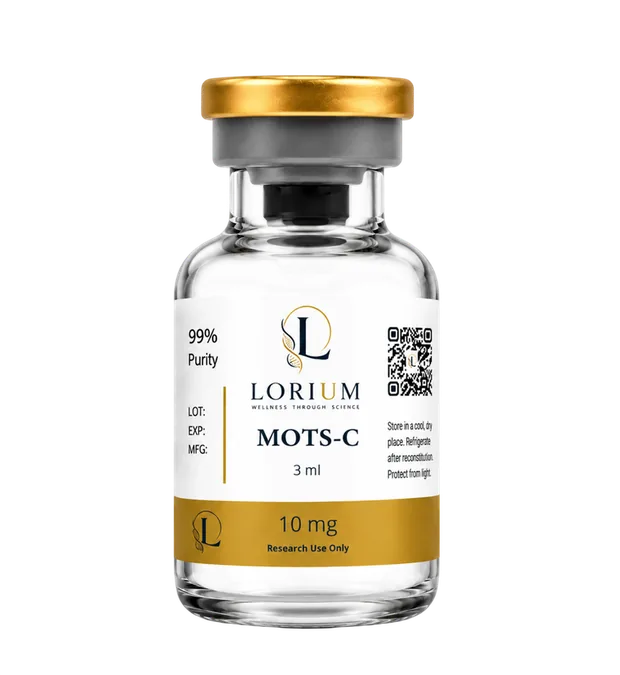
 LORIUM · 10 mg LYOPHILISED VIAL
MOTS-c
MOTS-c is a cutting-edge, 16-amino-acid mitochondrial-derived peptide engineered to act as a master link between cellular energy status and nuclear gene expression. By activating the critical AMPK pathway and restoring metabolic flexibility, this premium protocol targets skeletal muscle, liver, and adipose tissues to mimic the systemic benefits of high-intensity exercise and support age-related metabolic decline.
Researched effects
Effects observed in the cited literature. Individual results are not guaranteed. Statements have not been evaluated by the FDA.
Enhanced Insulin Sensitivity
Studied to show a notable 30% increase in glucose infusion and utilization rates.
Advanced Exercise Mimetic
Replicates post-exercise signaling to drive superior metabolic adaptations without systemic stress.
Optimized Cardiac Function
Supports cardiovascular vitality by enhancing systolic function and overall cardiac output.
AMPK Activation
Stimulates metabolic pathways via precise cellular inhibition.
Maximized Physical Performance
Boosts maximal endurance, physical stamina, and cellular longevity.
Metabolic Weight Management
Activates brown adipose tissue and upregulates key thermogenic fat-burning genes.
Neuroprotective Cognitive Support
Minimizes pro-inflammatory cytokines within neural pathways to support memory focus.
Specifications
Clinical references
- Lee, C., et al. (2015). The Mitochondrial-Derived Peptide MOTS-c Promotes Metabolic Homeostasis. Cell Metabolism, 21(3), 443–454.
- Kim, K. H., et al. (2018). MOTS-c Translocation to the Nucleus Regulates Metabolic Stress Responses. Cell Metabolism, 28(4), 516–524.
- Reynolds, J. C., et al. (2021). MOTS-c Is an Exercise-Induced Peptide Regulating Muscle Homeostasis. Nature Communications, 12(1), 320.
- Mohtashami, Z., et al. (2023). Mechanistic Review of Mitochondrial Open Reading Frames in Human Health. Journal of Translational Medicine, 21(1), 142.
- National Institutes of Health (2022). PMC Review: Mitochondrial-Derived Peptides in Aging and Age-Related Metabolic Disorders
More in Longevity
Epithalon
A synthetic tetrapeptide that mimics pineal-gland epithalamin, acting as a telomerase activator to restore cellular replicative capacity and drive systemic rejuvenation.
Glutathione
A naturally occurring tripeptide known as the body's master antioxidant, defending against cellular aging, oxidative stress, and toxic accumulation.
NAD+
A vital coenzyme present in all living cells that serves as the catalyst for cellular energy production, DNA repair, and anti-aging signaling.